Framed the problem through research
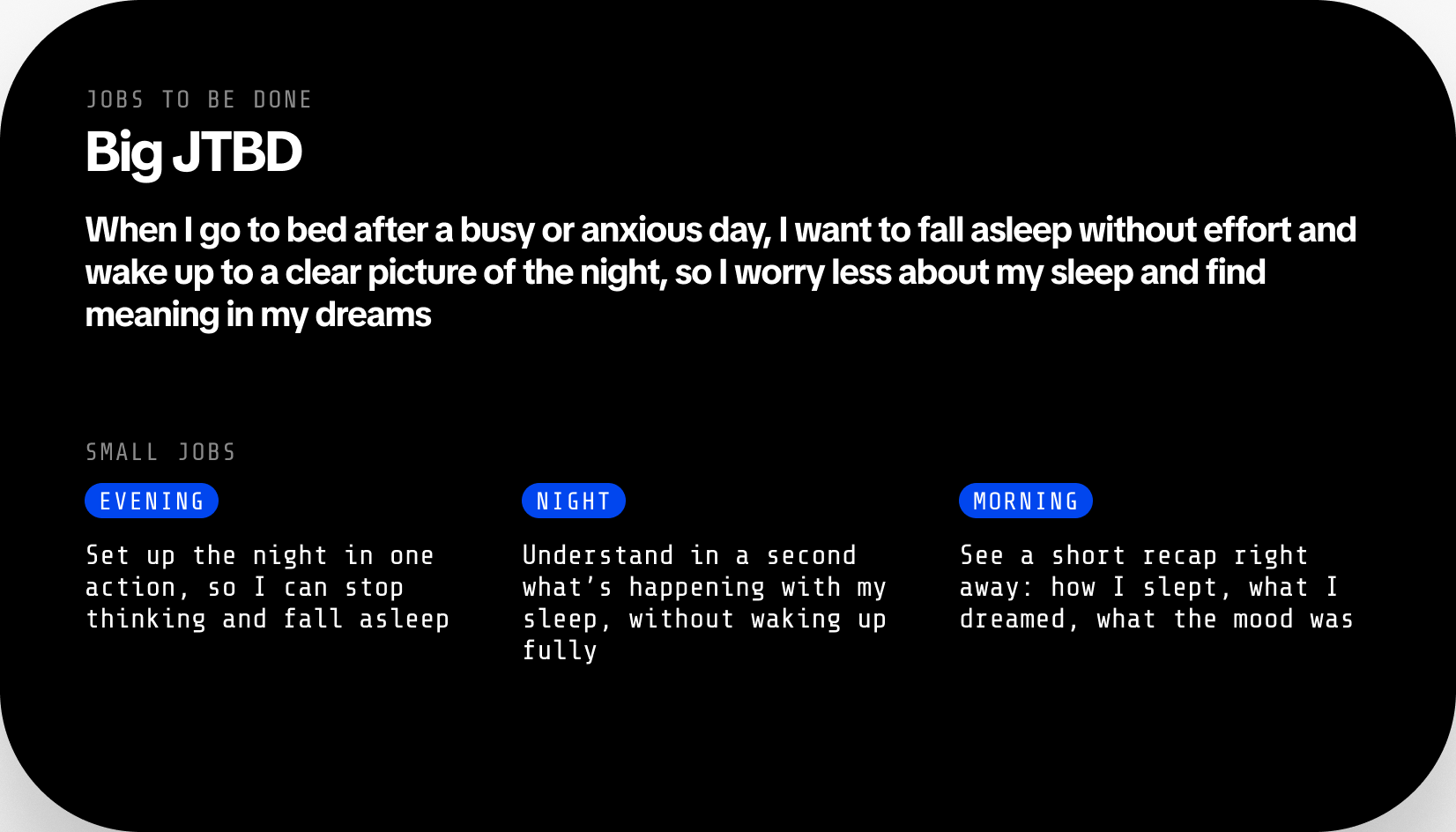
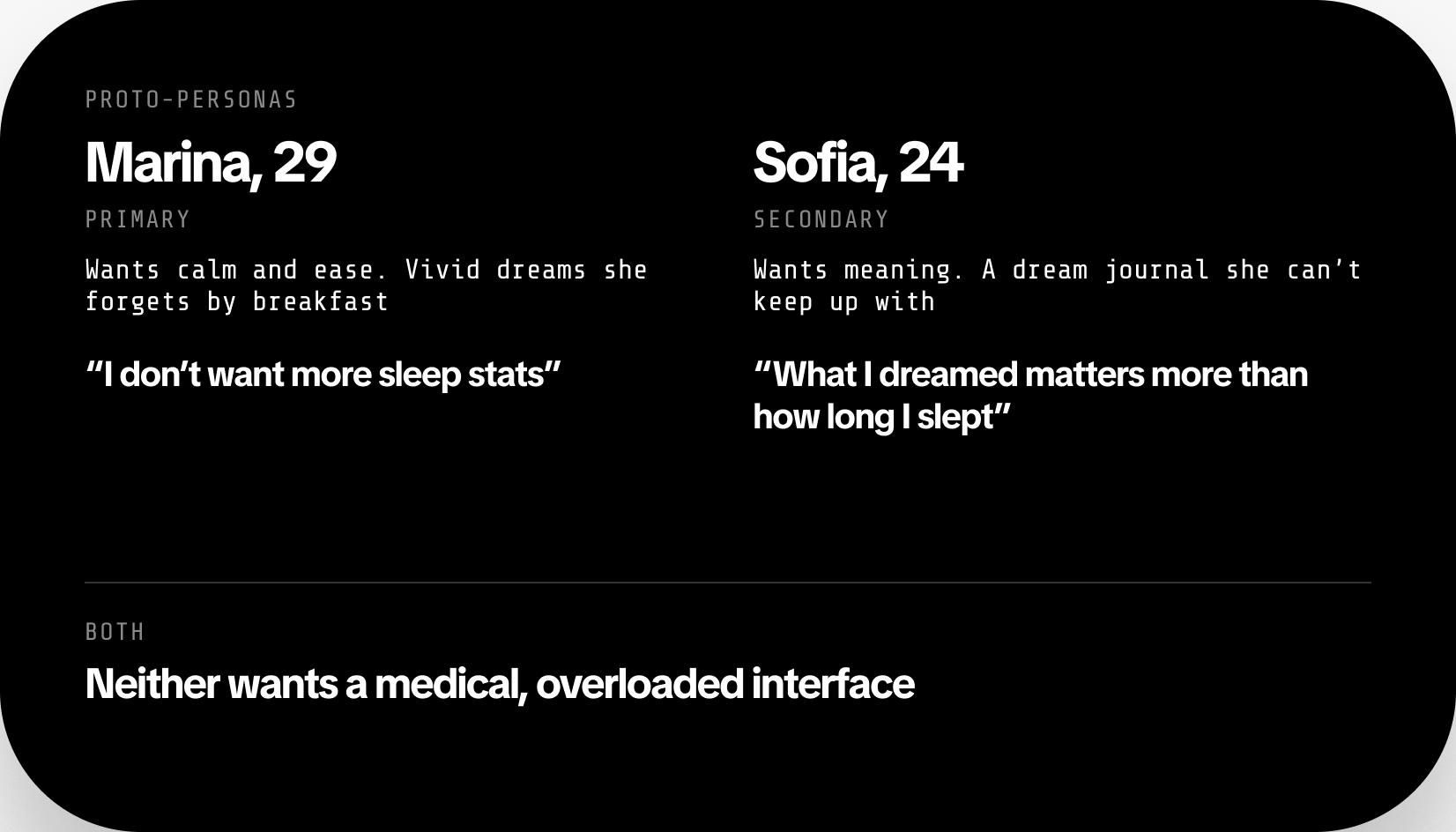
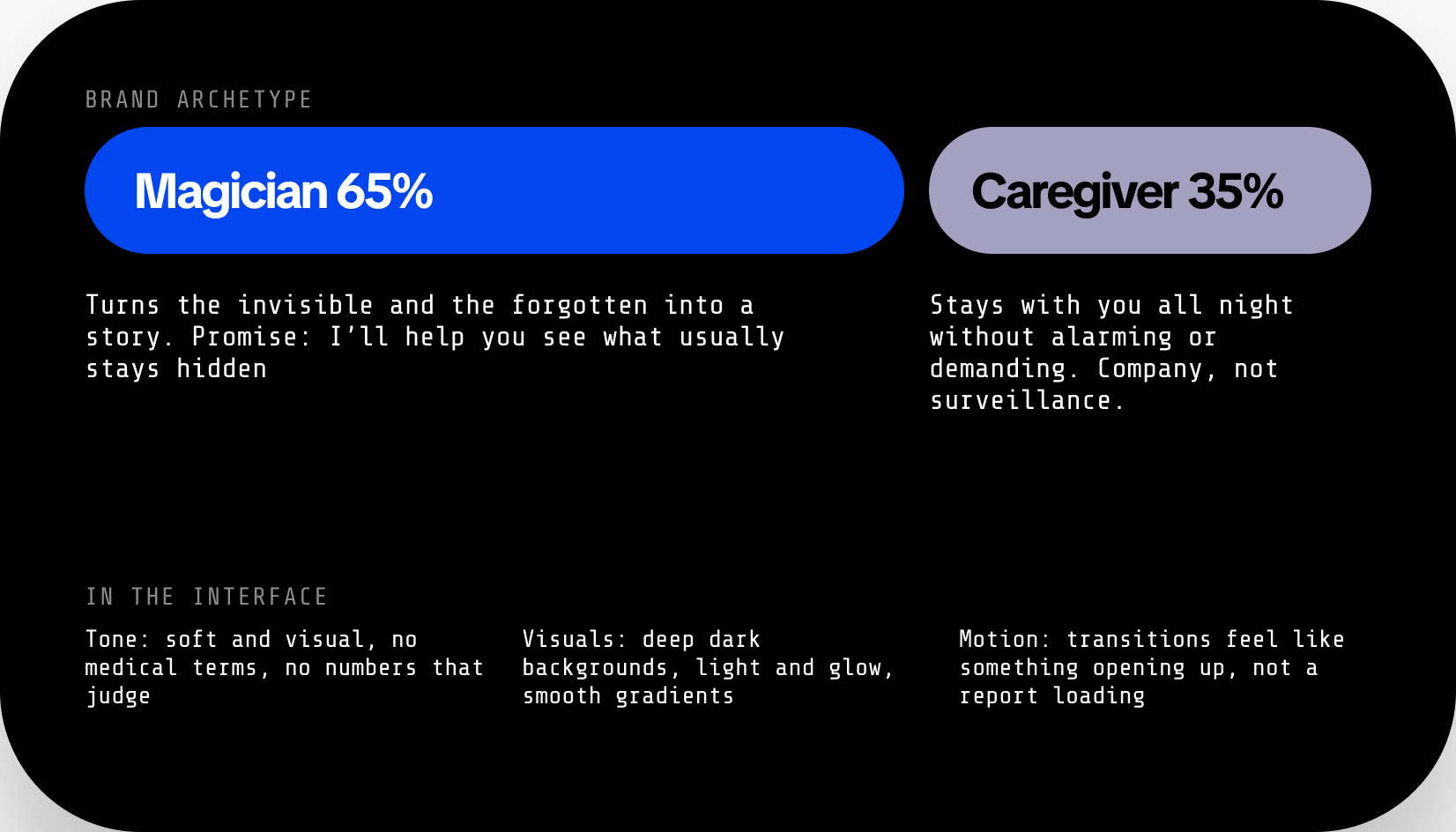
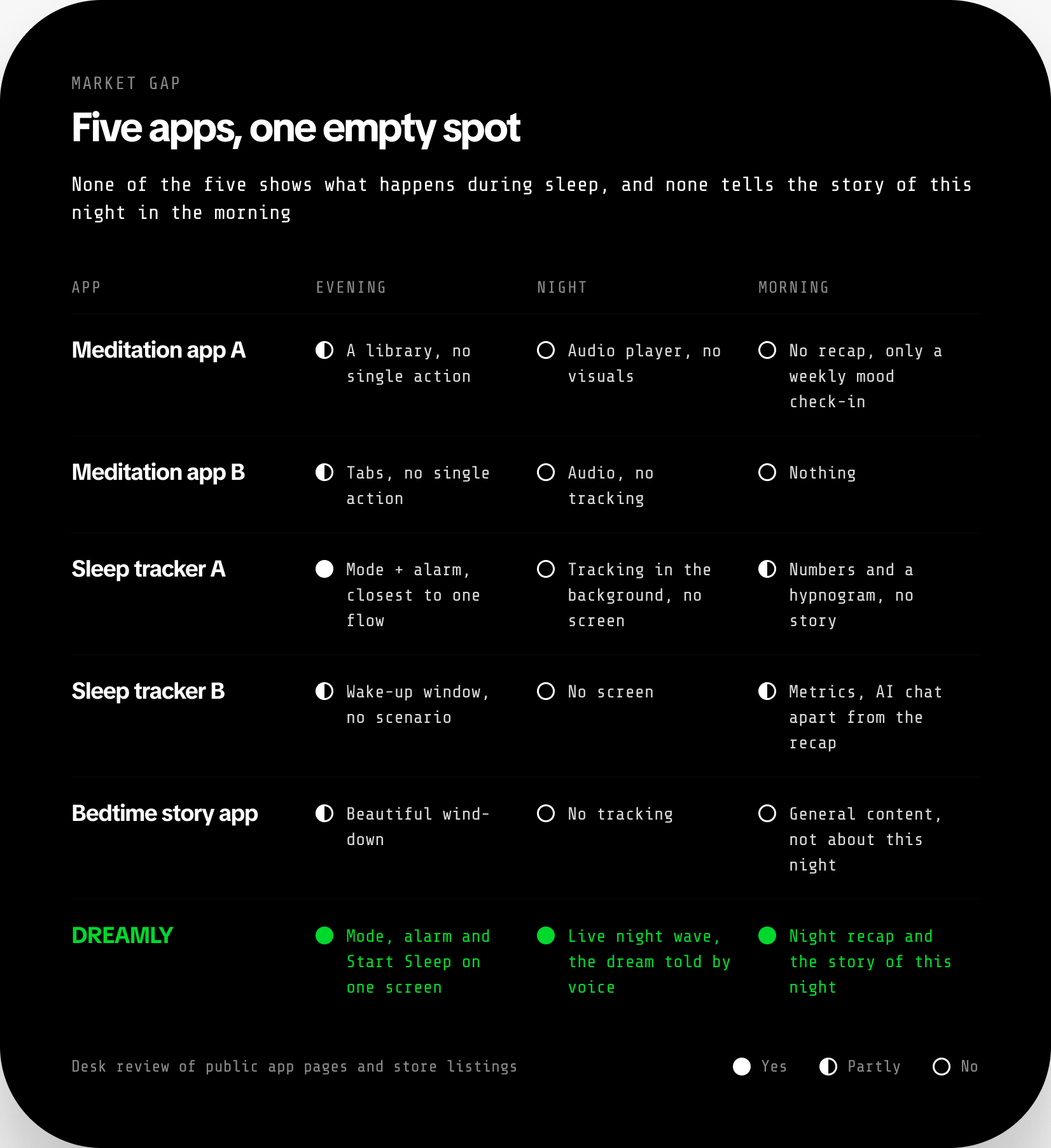
I wrote a Big JTBD, built two proto-personas and a Magician + Caregiver archetype, and reviewed five market leaders


Sleep and dream app concept for iPhone and Apple Watch
Product Designer, Product Art Director I created the product concept: research, the scenario of one night, UX and UI for iPhone and Apple Watch, motion, and a clickable prototype
Sleep trackers measure the night in charts and scores that read like a verdict. Content apps play sounds but know nothing about the night you just had. And dreams fade before anyone gets to write them down. The challenge was to carry one night from bed to the meaning of a dream, with no medical language and no guilt.
I wrote a Big JTBD, built two proto-personas and a Magician + Caregiver archetype, and reviewed five market leaders
From Start Sleep at 11:30pm to I’m up at 7:30am, every screen tells the same night in one prototype flow
Light shimmers, rain runs down the glass, the sky turns like a star-trail timelapse, and the orb breathes while it works
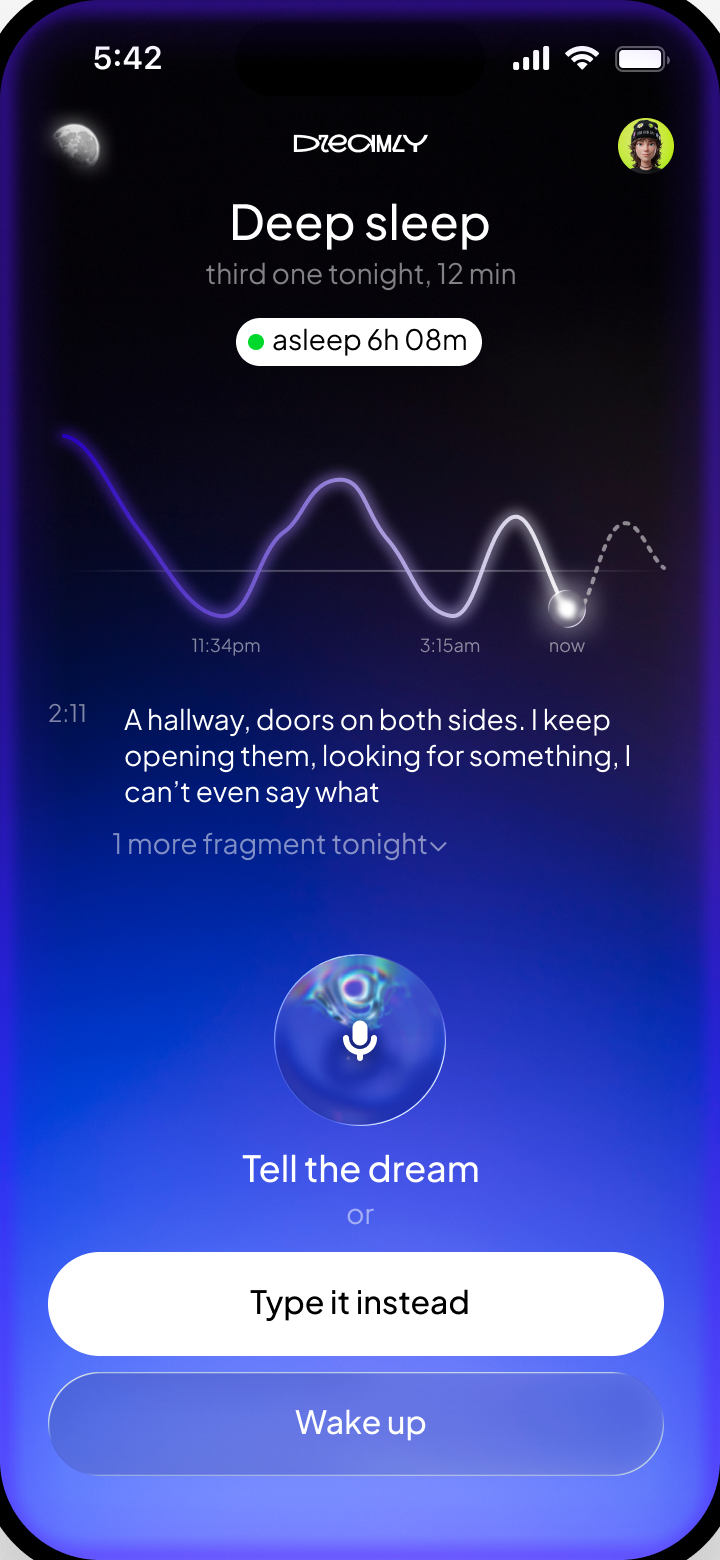
Tell the dream from your wrist without reaching for a bright phone, and your voice turns into a light on the night wave
Five market leaders, one gap: none of them shows the night itself or tells its story in the morning
One screen, one action: pick Quiet mode, Soft rain or Night meadow, set the alarm and tap Start Sleep
A live wave shows where you are in the night. A dream can be told by voice before it fades
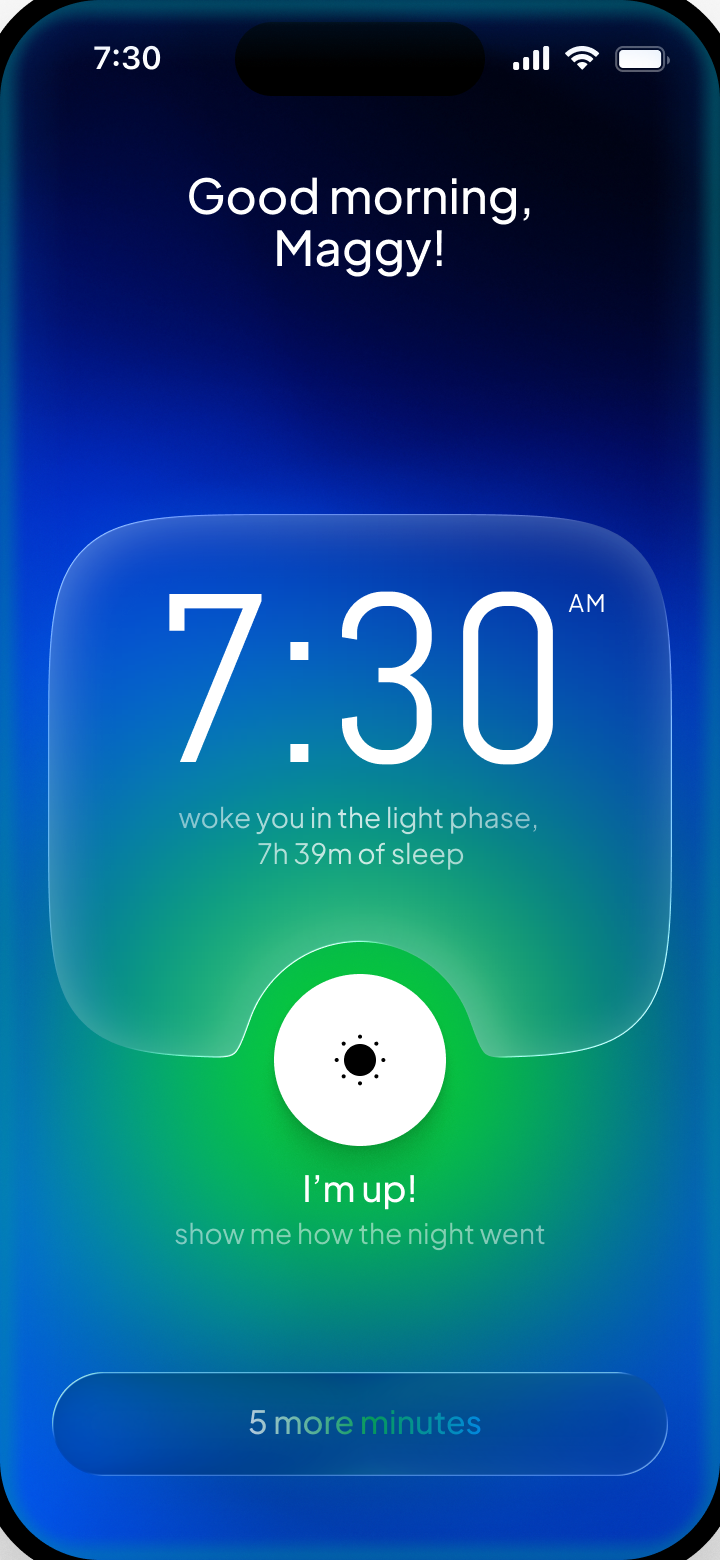
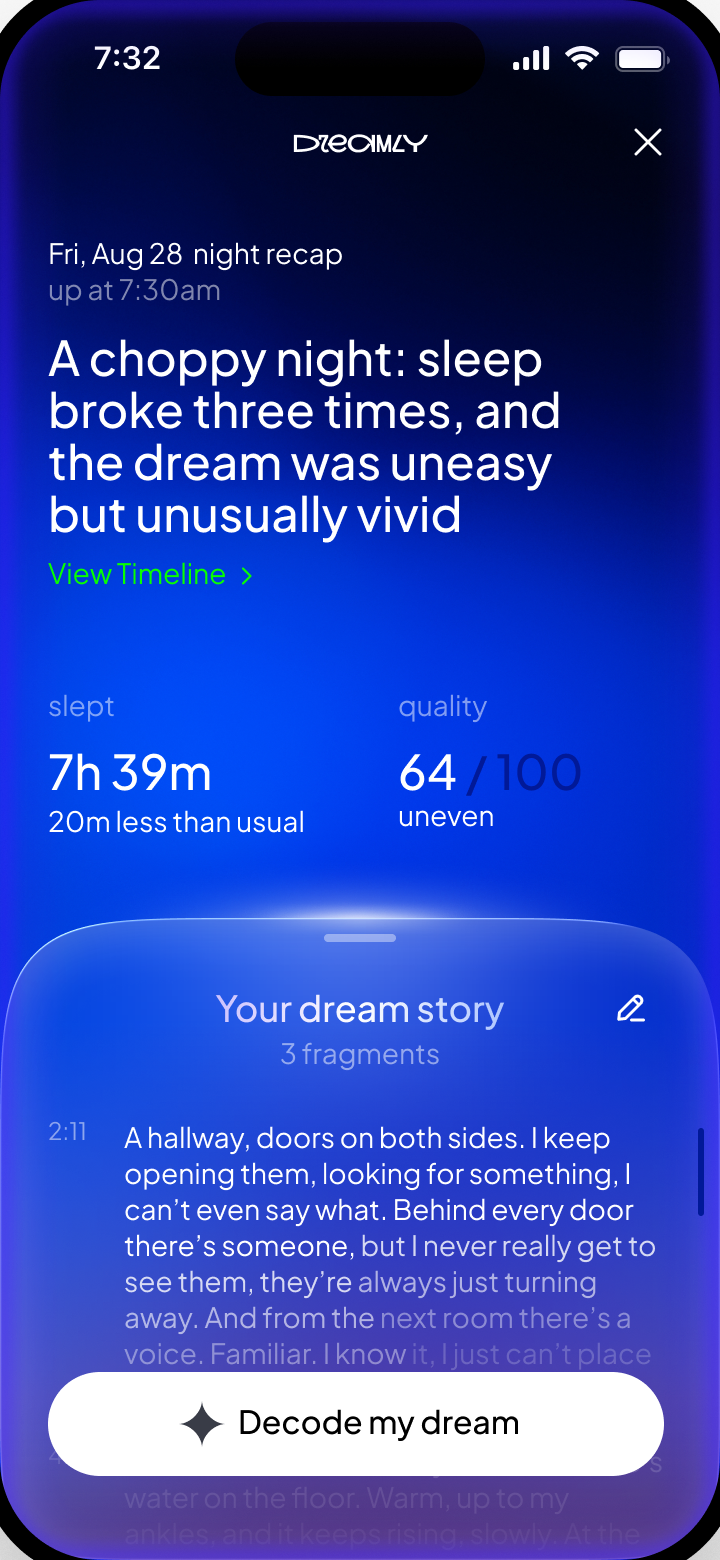
I’m up at 7:30am, then Night recap: one line about the night and Your dream story in three fragments.
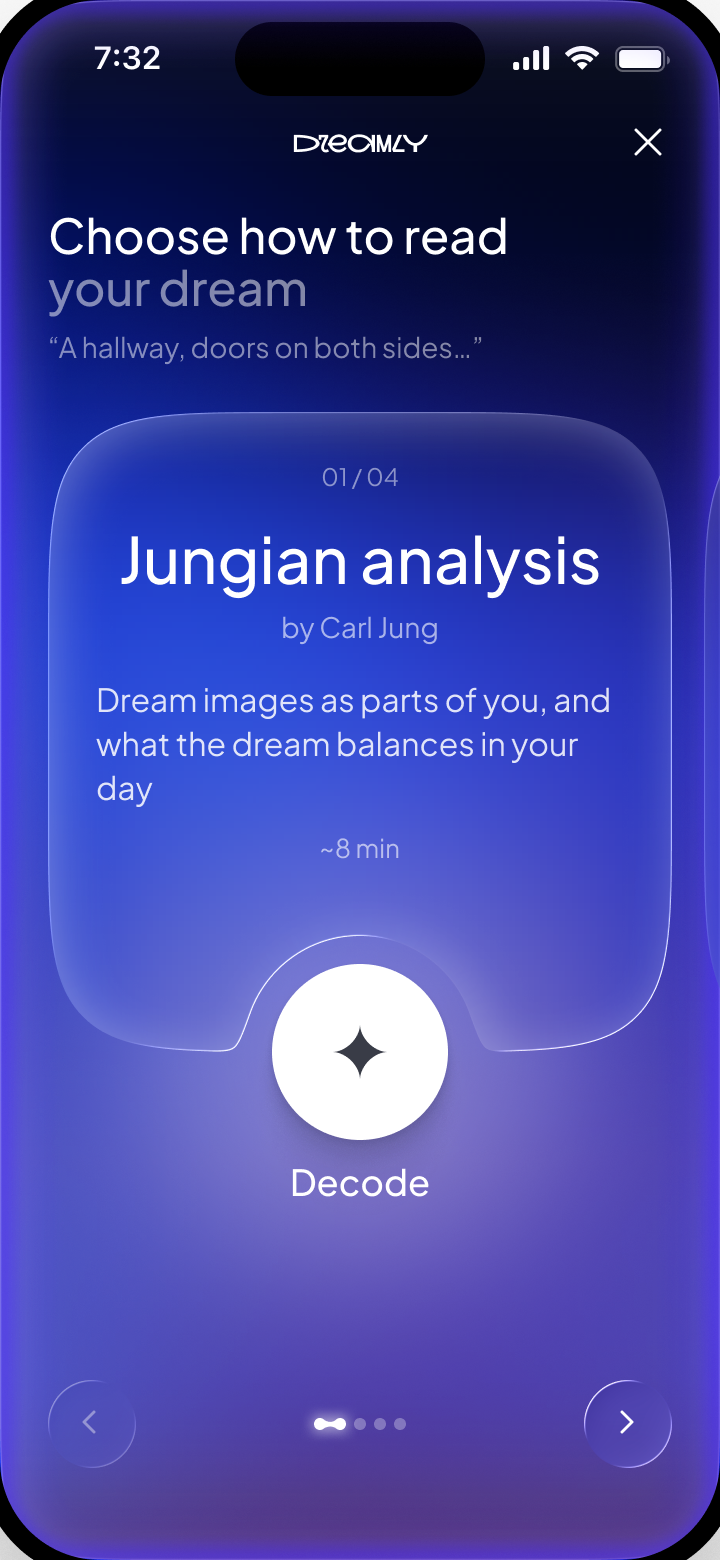
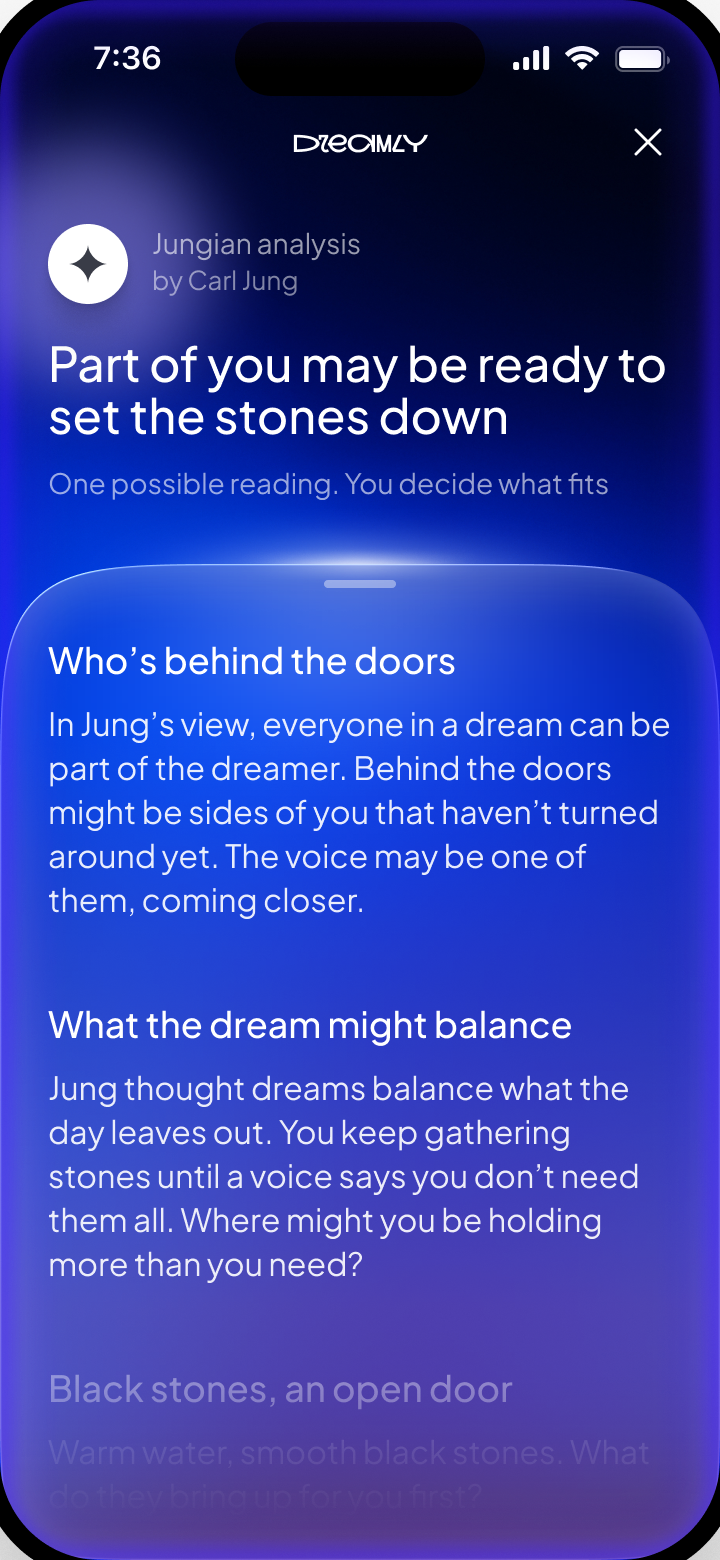
Four psychology methods, named by school and author. No dream dictionaries, no diagnoses
Raise your wrist, tell the dream, and your voice lands as a light on the night wave at 4:05
I set the whole product vision: market positioning, brand character, one night as the core story, and its look and motion on phone and watch.
AI dream readings grounded in psychology: four named methods, no dream dictionaries or diagnoses, and the dreamer always decides what fits.